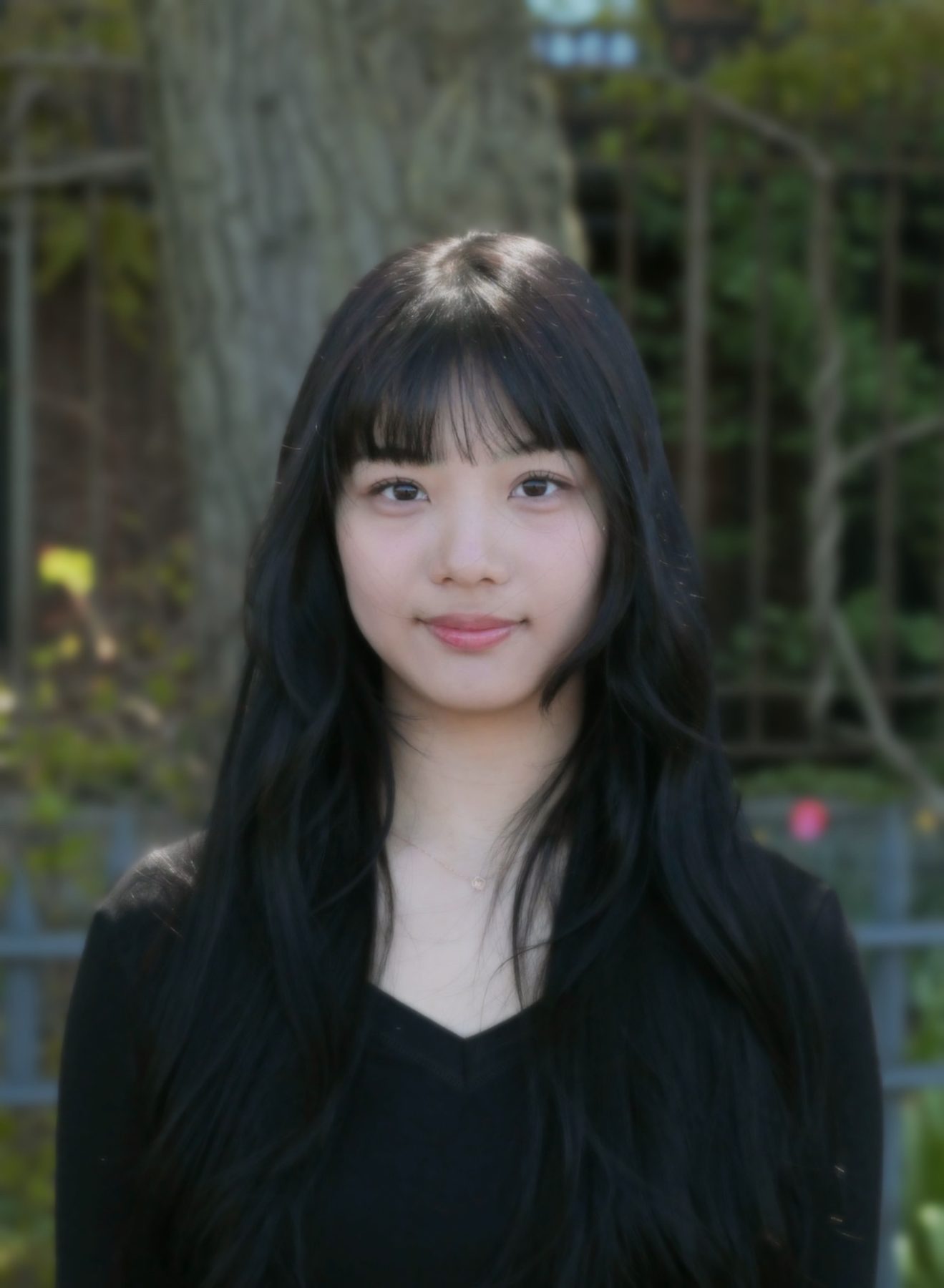
HI! I'M OLIVIA, AN INDUSTRIAL DESIGN STUDENT BASED IN BROOKLYN, NEW YORK.
designing for care
HI! I'M OLIVIA, AN INDUSTRIAL DESIGN STUDENT BASED IN BROOKLYN, NEW YORK.
designing for care
Fine Art
{{ a.medium }}
{{ a.award }}
Fine Art · Foundation
Before I pursued industrial design I spent many years of studio practice in painting and drawing. These efforts are recognized through my fine arts portfolio, which has shaped the way I see form, light, and material. The pieces below act as the foundation for my design eye.
Pratt FoundationFolio Winner · 2026
Scholastic Regional Gold Key · Portfolio
Scholastic Regional Silver Key · Portfolio
Federal Duck Stamp Winner
Click any image to enlarge.
{{ a.medium }}
{{ a.award }}
Sketches · Studies
Charcoal, Neocolor, and acrylic studies.
Pratt FoundationFolio Winner · 2026
{{ a.medium }}
{{ a.award }}
3D Sculptures
Sculptural studies in wood, where structure, balance, and material meet. The same instincts that drive my product work, made physical.
Pratt FoundationFolio Winner · 2026
{{ a.medium }}
{{ a.award }}
Elderly Wellness · 2025
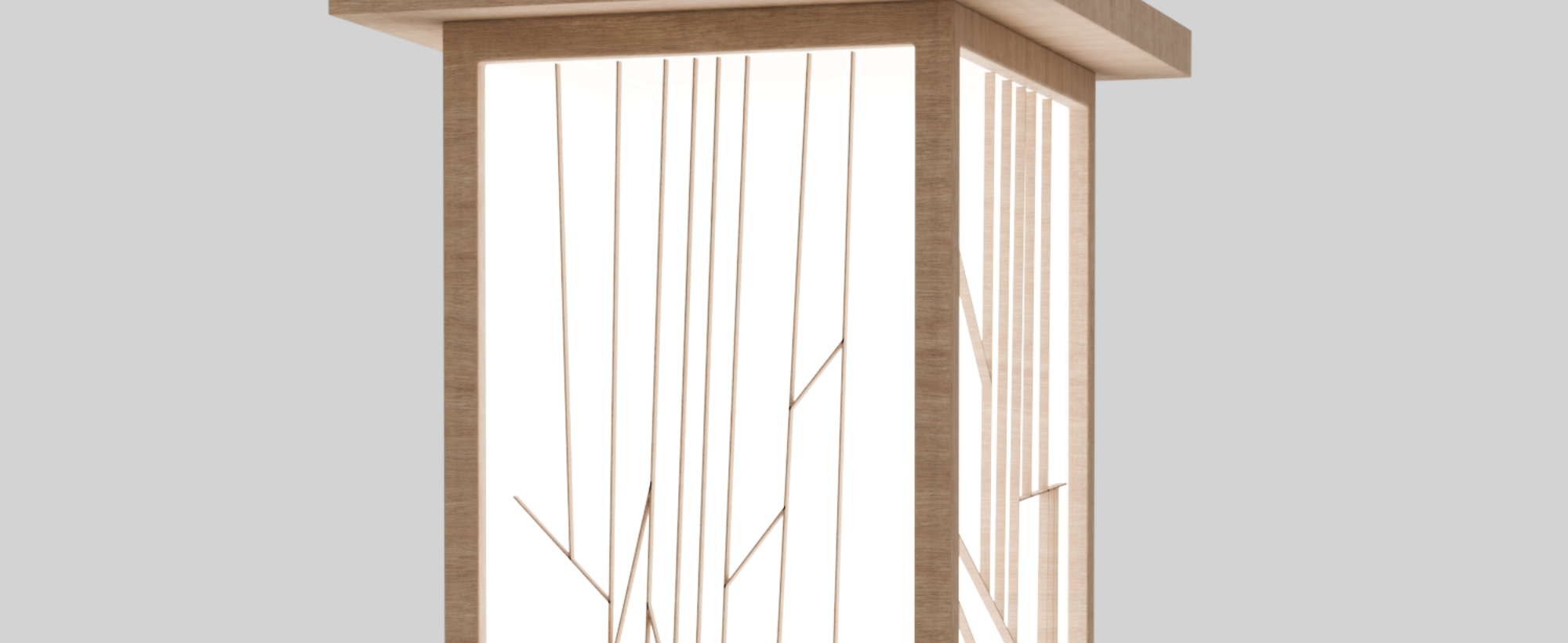
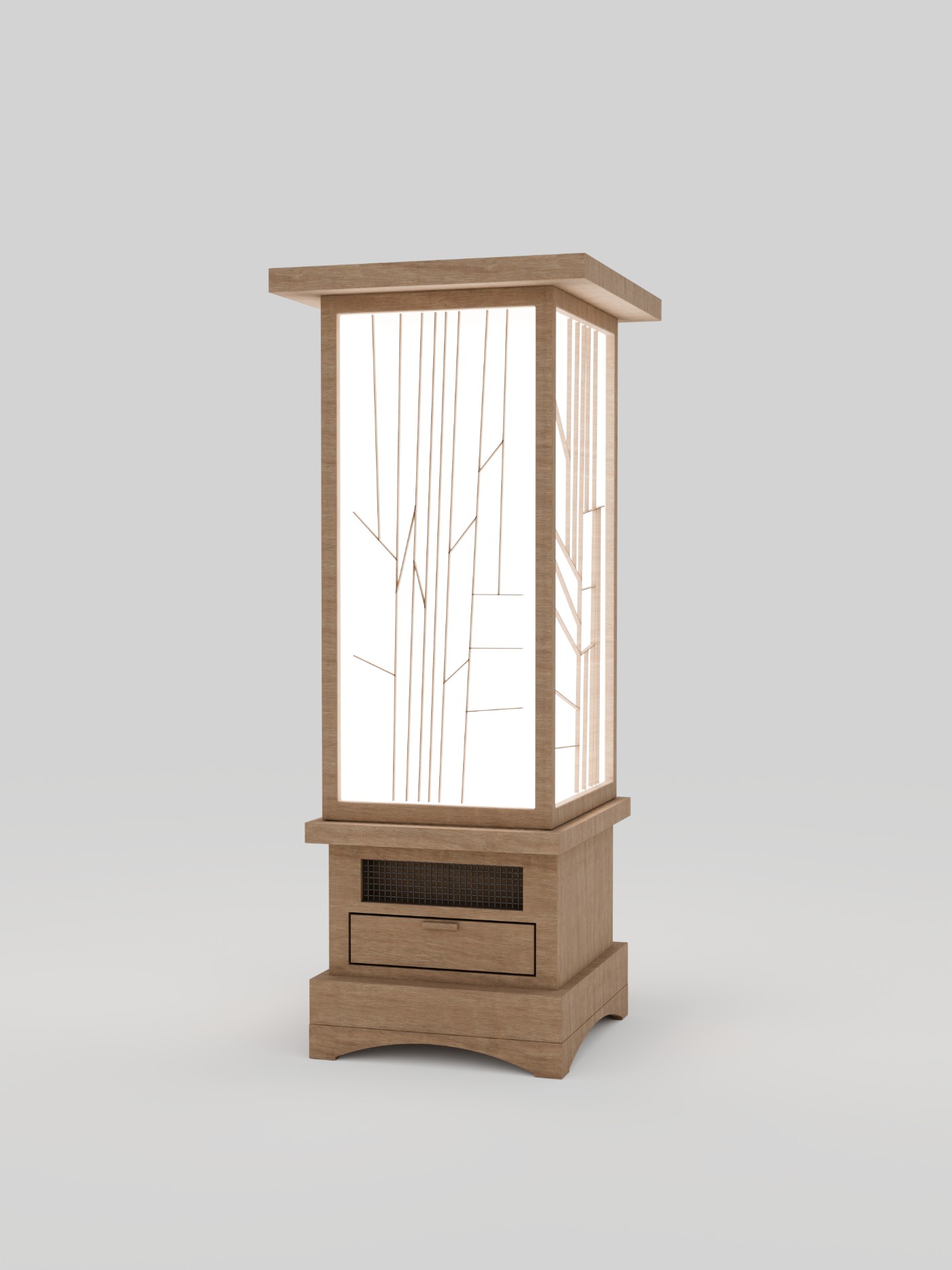
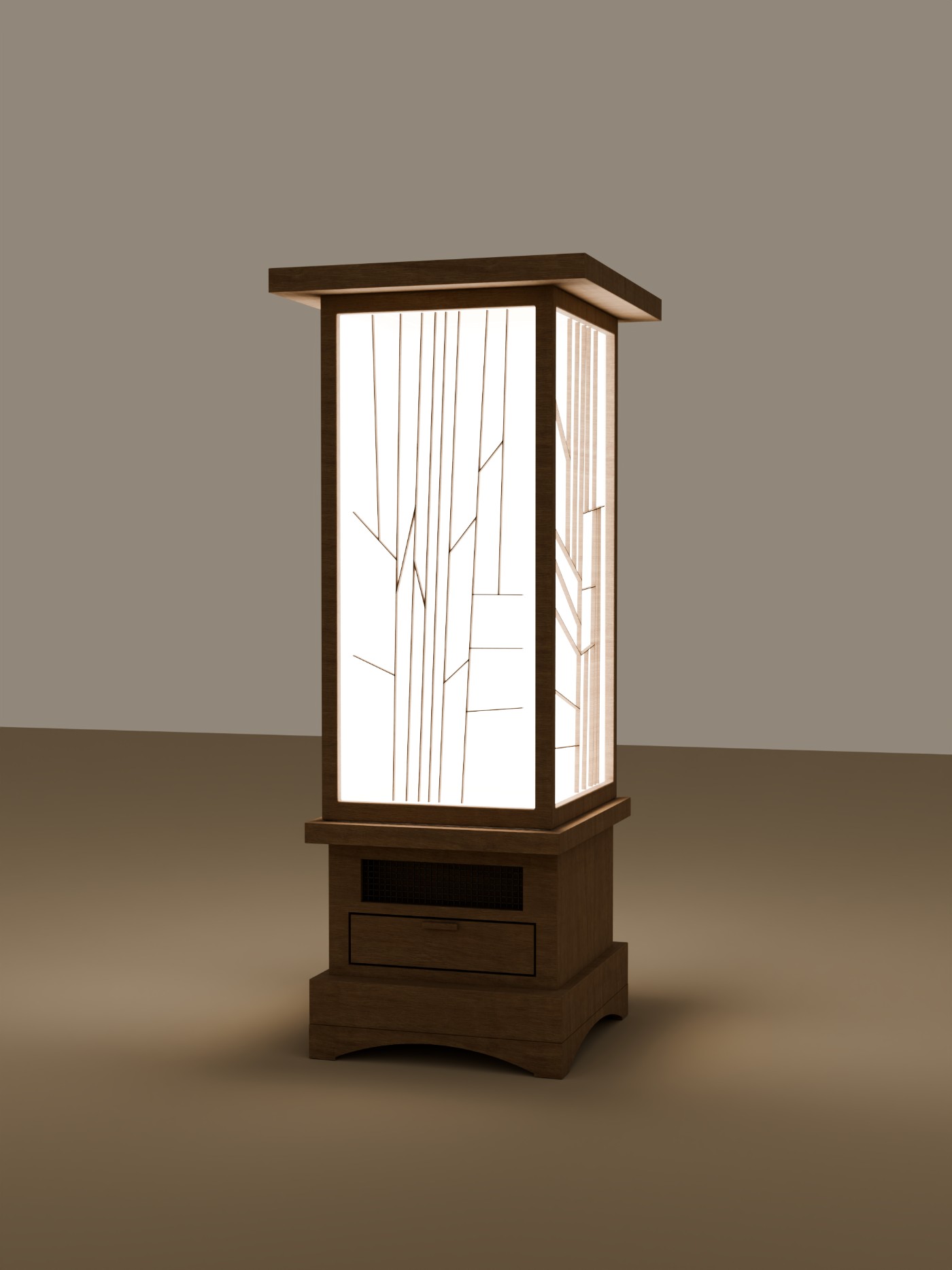
A bedside wellness lamp for older adults — warm, dimmable light with gentle scent and sound in one quiet object.
What it does
Light
A soft, dimmable glow — warm or cool — low enough to sleep beside.
Scent
A drawer that lifts to release a calming fragrance through the night.
Sound
A built-in speaker plays soft music to help them drift off, then fades.
Hands-free
Motion and door sensors run the whole night on their own — no buttons.
Renders
Type
Summer Project
Year
2026
Tools
Rhino · Blender
Role
Self Initiated
The ProblemMy grandparents sleep badly — bright lamps keep them up, they “hate buttons,” and they’d rather not reach for pills. How might one quiet object help them wind down?
Andon is a bedside wellness lamp for older adults, bringing warm, dimmable light together with gentle scent and sound in one quiet object.
These pages trace the project from a sleep-habits interview with my grandparents, through ideation and modeling, to a final lit render. The film below shows the finished work.
Research
Andon began with a sleep-habits interview with my grandparents. Their answers surfaced four recurring pain points, and each one shaped a part of the final design.
Sleep & wellbeing
Poor sleep left them groggy, unfocused, and reaching for pills, sometimes awake until 2am, with headaches the next day.
Andon answers with a calm bedtime ritual of light, scent, and sound to wind down without medication.
Light
They find total dark unsettling, yet bedside lamps are "too bright, distracting and hard to sleep." They wanted something softer and smaller, set away from the bed.
A low, dimmable glow, warm or cool, to settle a gentle grandpa-vs-grandma disagreement.
Scent & sound
Soft music helps them drift off, and they reach for essential oils and gentle scents to relax before sleep.
A built-in speaker and a scent drawer that lifts to release fragrance.
Effortless control
They "hate buttons" and wanted lighting to be automatic: on when someone enters the room, off when they leave, with lights down around midnight.
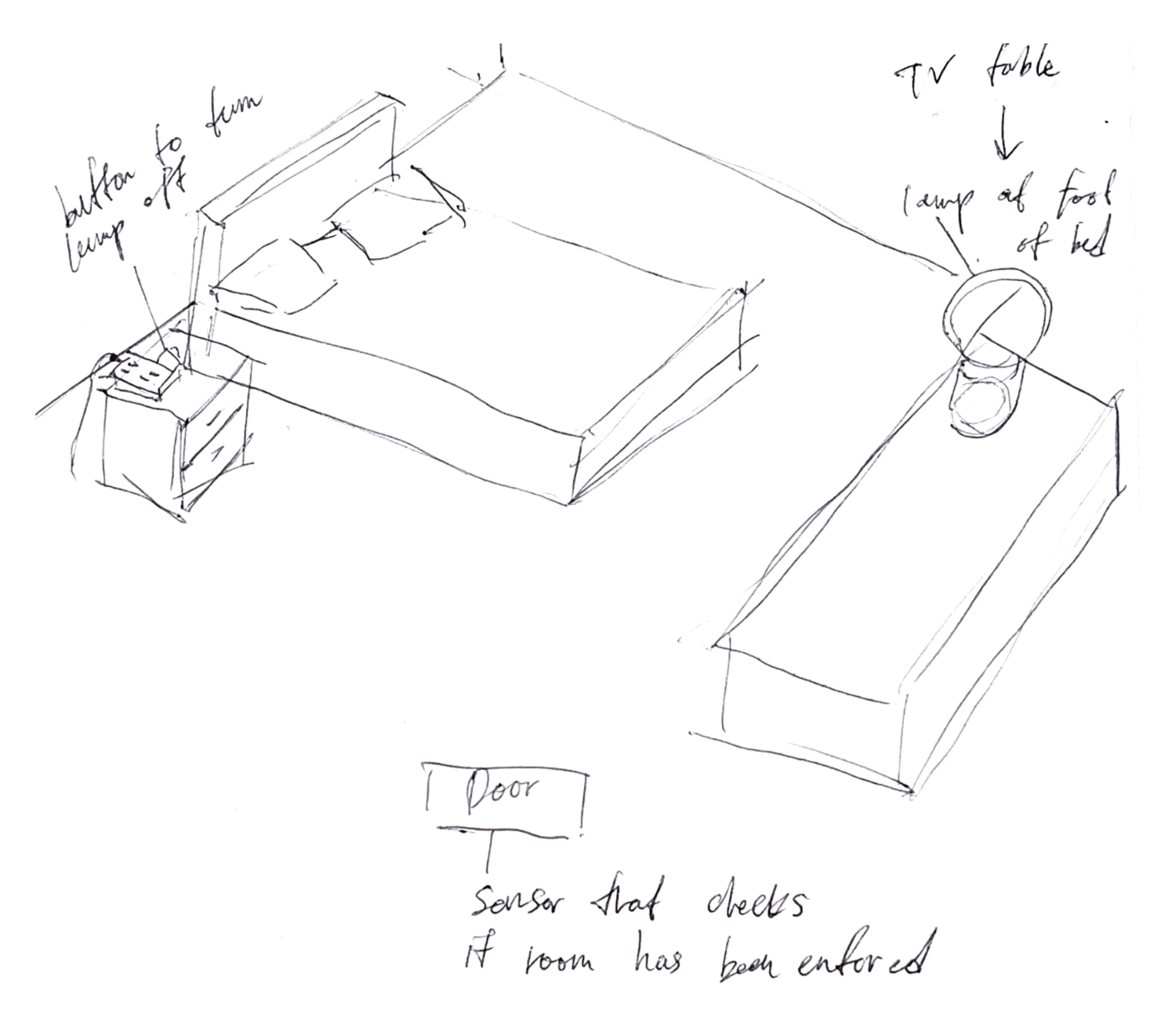
A door sensor that registers entry, so the lamp responds on its own.
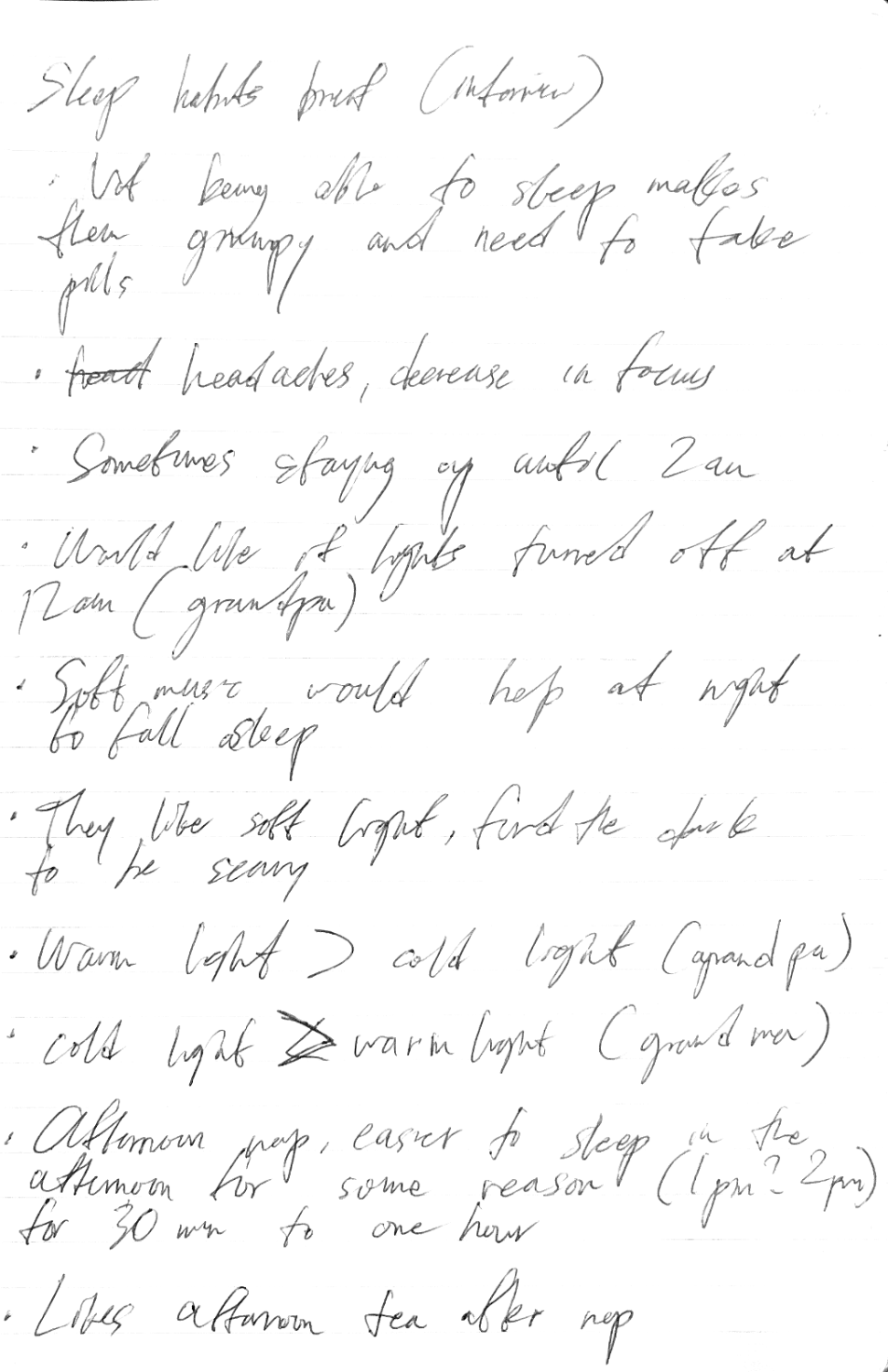
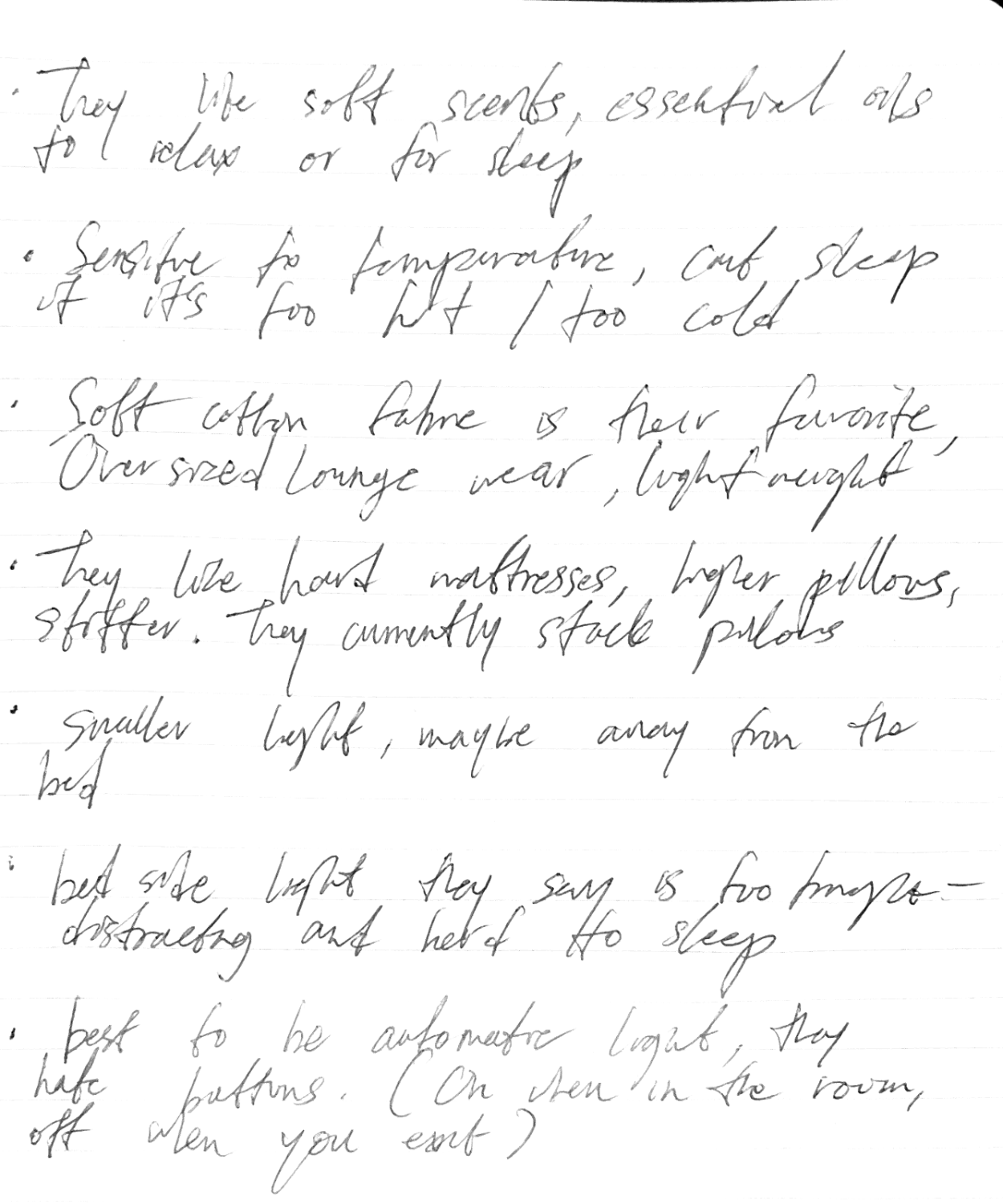
From the interview notes
How It Works
Andon runs a quiet, hands-free routine across the night, tuned to my grandparents' own evening rhythm.
7 PM
A motion sensor in the bedroom notices movement after 7pm and begins the night routine: the lamp slowly warms on into a soft, warm light as they settle in and watch their shows.
10 PM
About three hours later, the scent diffuser switches on to help them relax and drift toward sleep.
12 AM
At midnight the light begins to dim, settling into a gentle night light. Soft music plays for a set duration, then slowly fades.
Through the night
The night light stays on. A button on the nightstand, or a remote, can turn it off without interrupting their wind-down.
7 AM
The lamp turns itself off automatically in the morning.
Ideation
Where the lamp lives, set at the foot of the bed, with a bedside control to switch it off and a door sensor that registers when the room has been entered.
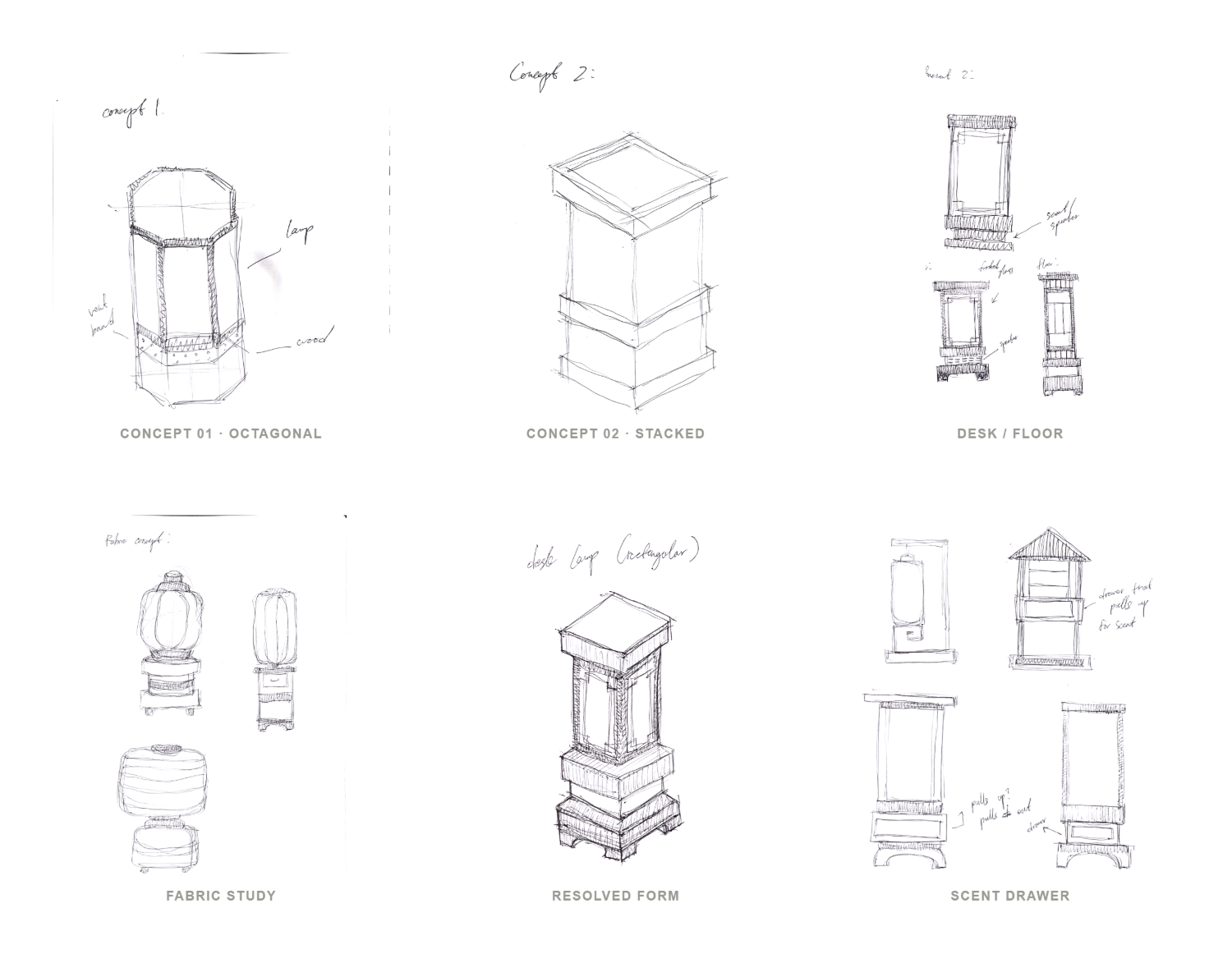
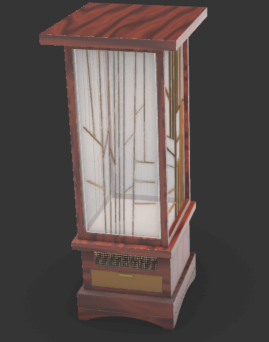
My grandparents are from China, so I looked to Chinese lanterns for the form, hoping to make the lamp feel calming and familiar to them. From two opening silhouettes (a faceted octagonal lantern and a stacked volume) through desk and floor refinements and a fabric variation, to the resolved tiered form and the drawer that lifts to release scent.
Modeling
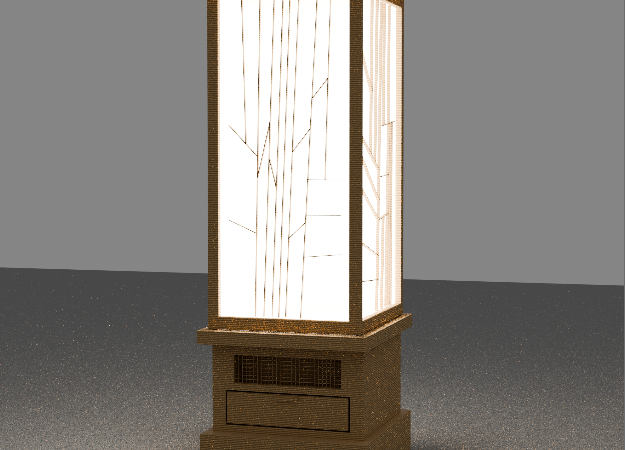
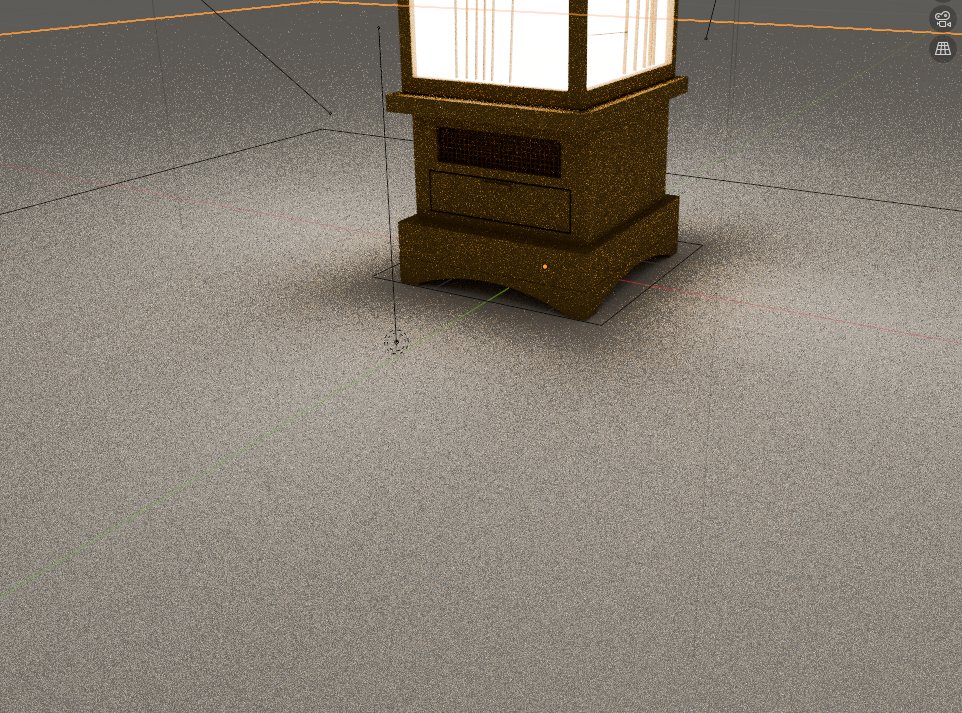
The lantern was built in Rhino, then taken into Blender for lighting, rendering, and animation.
Final Renders & Film
Reflection
Andon resolved into a single calm object that answers all four needs at once: soft light, scent, sound, and hands-free control. If I carried it further, I’d prototype the door-sensor dimming in real hardware and test the scent drawer with the people it’s actually for. I would also make an app to connect to the lamp for routine analysis and feedback.
Self-Driving Retreat · 2026
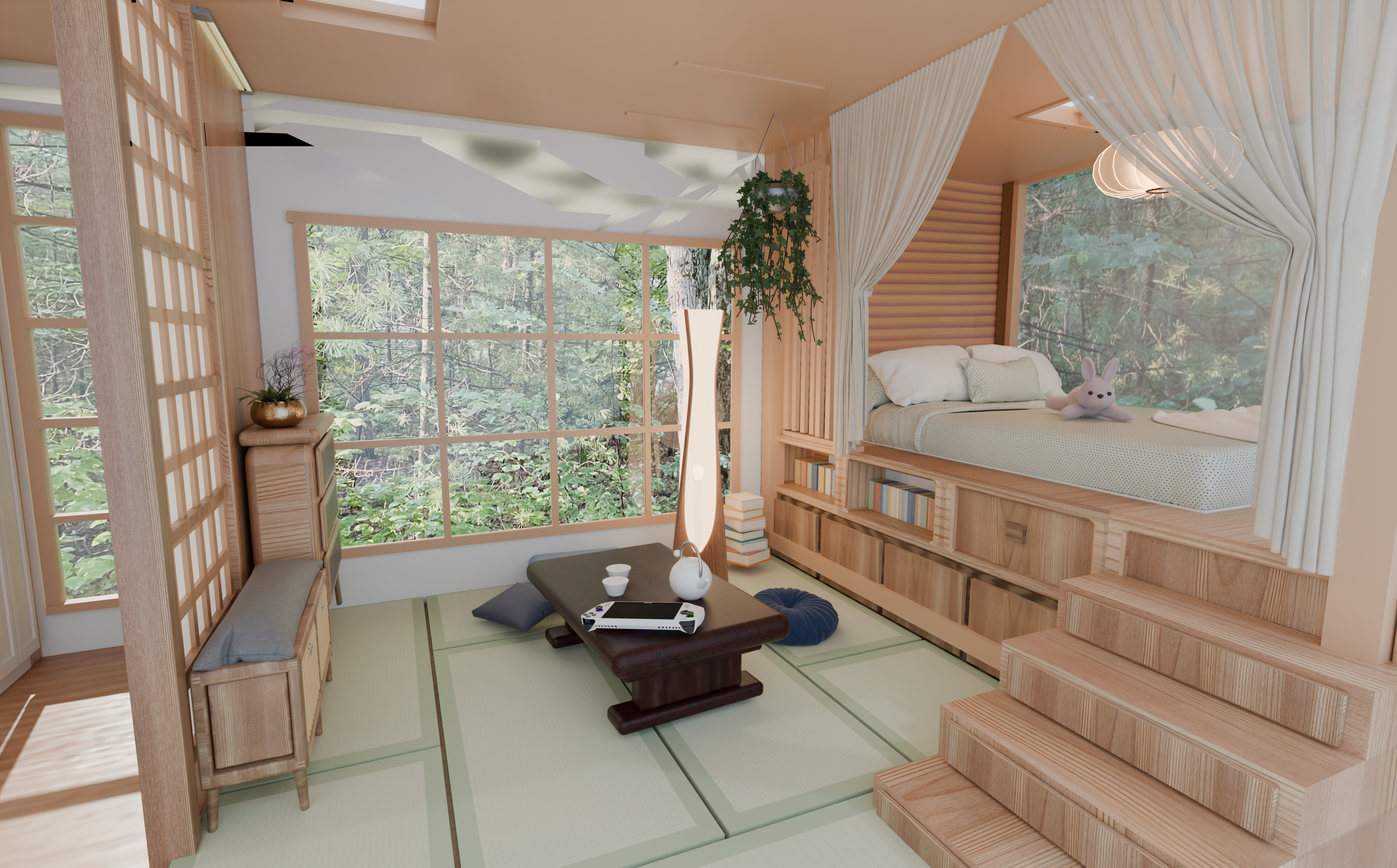
A self-driving RV interior for one or two travelers — a compact, lived-in retreat that opens to the landscape instead of the road.
What it does
No dashboard
The car drives itself, so the cabin drops its car logic and becomes a room.
View from bed
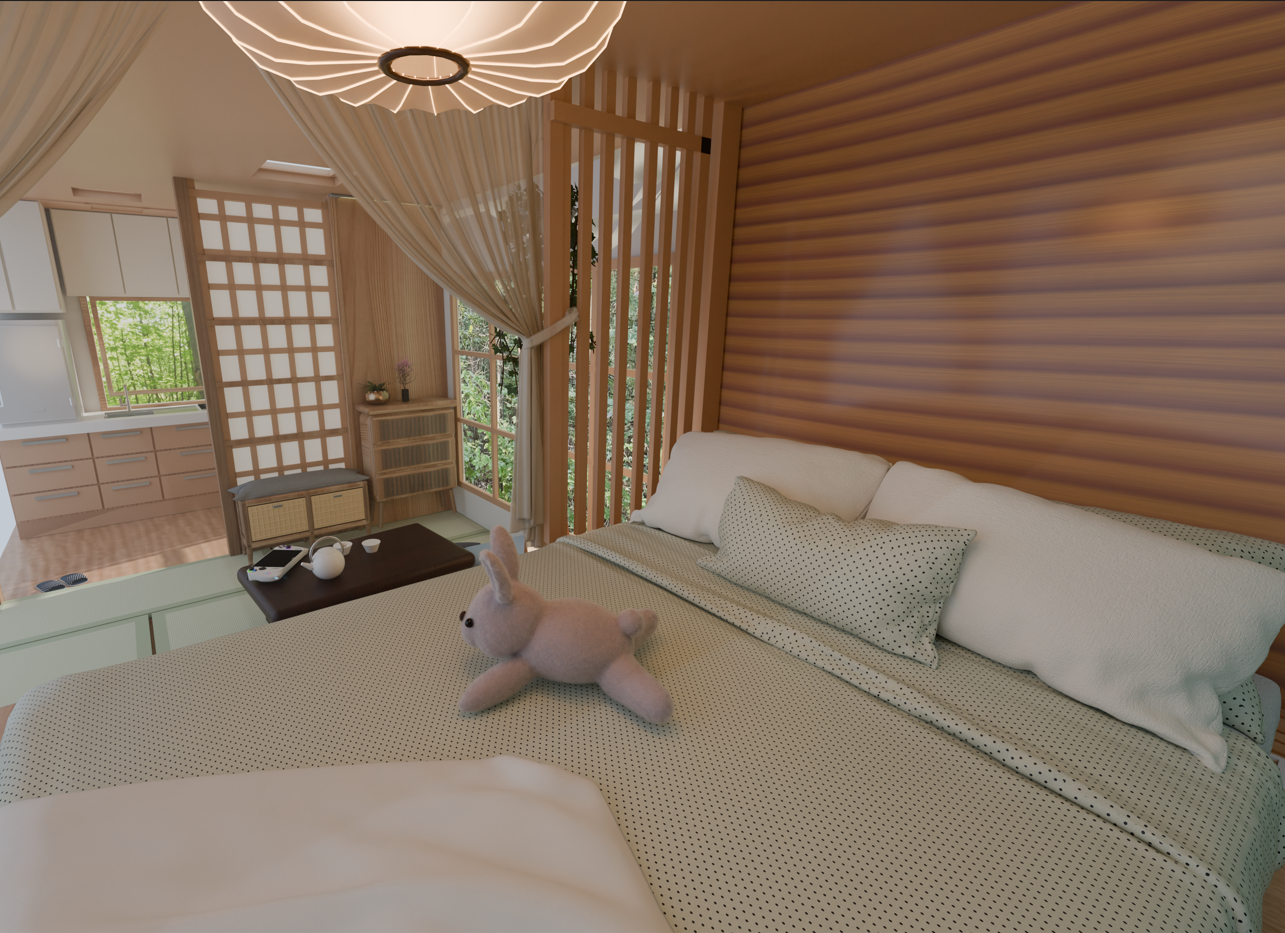
The bed sits against a wide picture window — the passing landscape is the view.
Tea space
Train-like windows for scenic rides — sip tea or play board games as you go.
Wabi-sabi
Warm wood, paper, tatami, and soft textiles keep it honest and lived-in.
Renders
Type
Self-initiated
Year
2026
Tools
Rhino · Blender
Role
Solo
The ProblemWhen a vehicle drives itself, the dashboard disappears, and the interior is free to stop being a “car.” So what should it become?
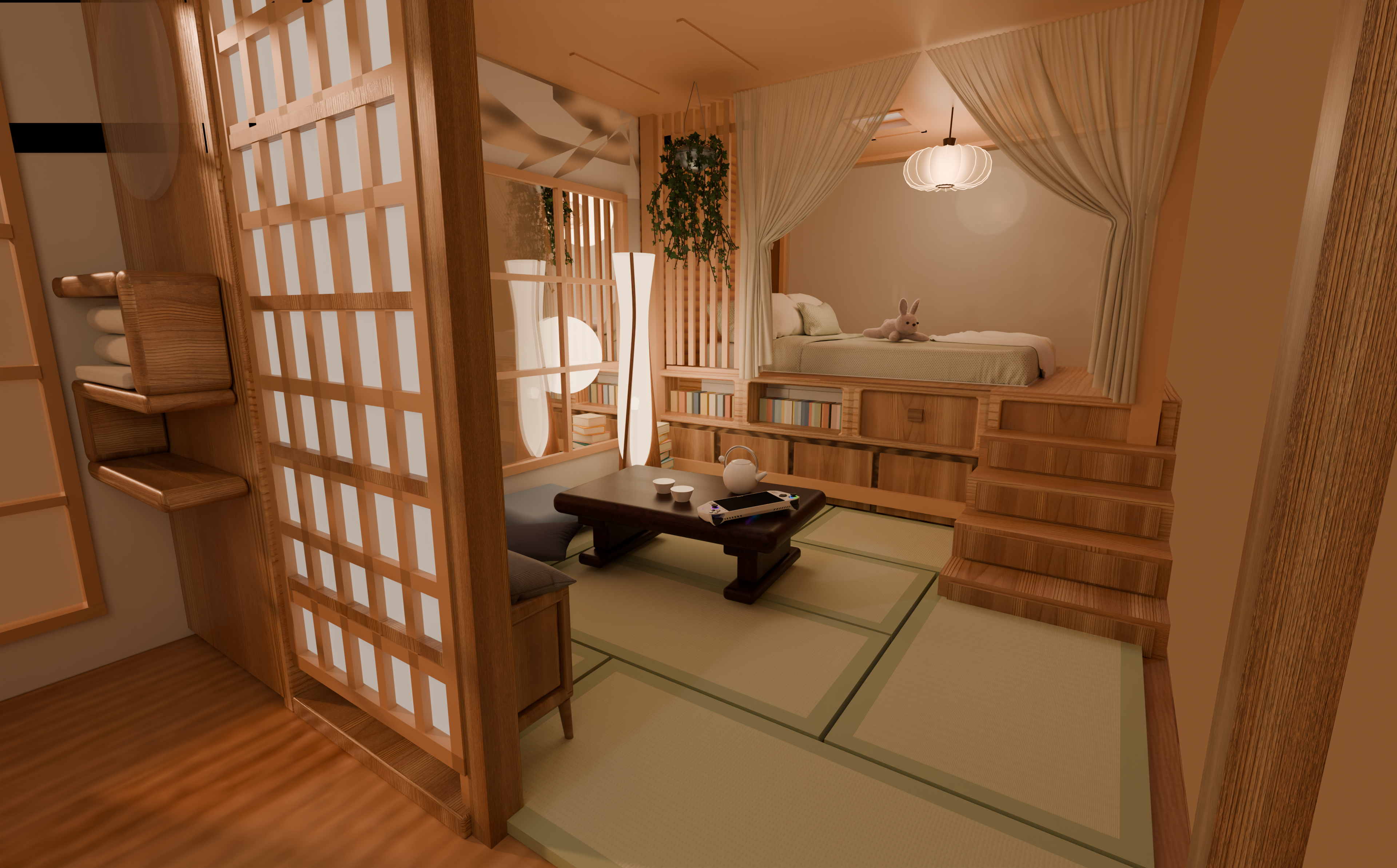
Drift is a self-driving RV interior for one or two travelers. It's a compact, lived-in retreat built to let technology fade into the background, encouraging integration with nature.
Self-driving technology allows the vehicle to drive itself, opening up travel to those who can't or no longer drive. This is perfect for solo wanderers and elderly couples who still want the freedom of the open road without being behind the wheel. It's a direct nod to autonomy and independence.
Once the vehicle drives itself, the cabin is freed from the dashboard. The bed sits against a wide picture window, opening the space to the landscape. The interior uses a wabi-sabi material palette of warm wood, paper, tatami, and soft textiles, keeping the space feeling honest and lived-in rather than showroom-luxurious.
The interior draws inspiration from Japandi spaces for their feelings of quiet, grounded calm.
The large windows are inspired by Japanese trains; while driving past scenic routes, travelers can drink tea or play board games and gaze out at the passing scene.
Mood & CMF
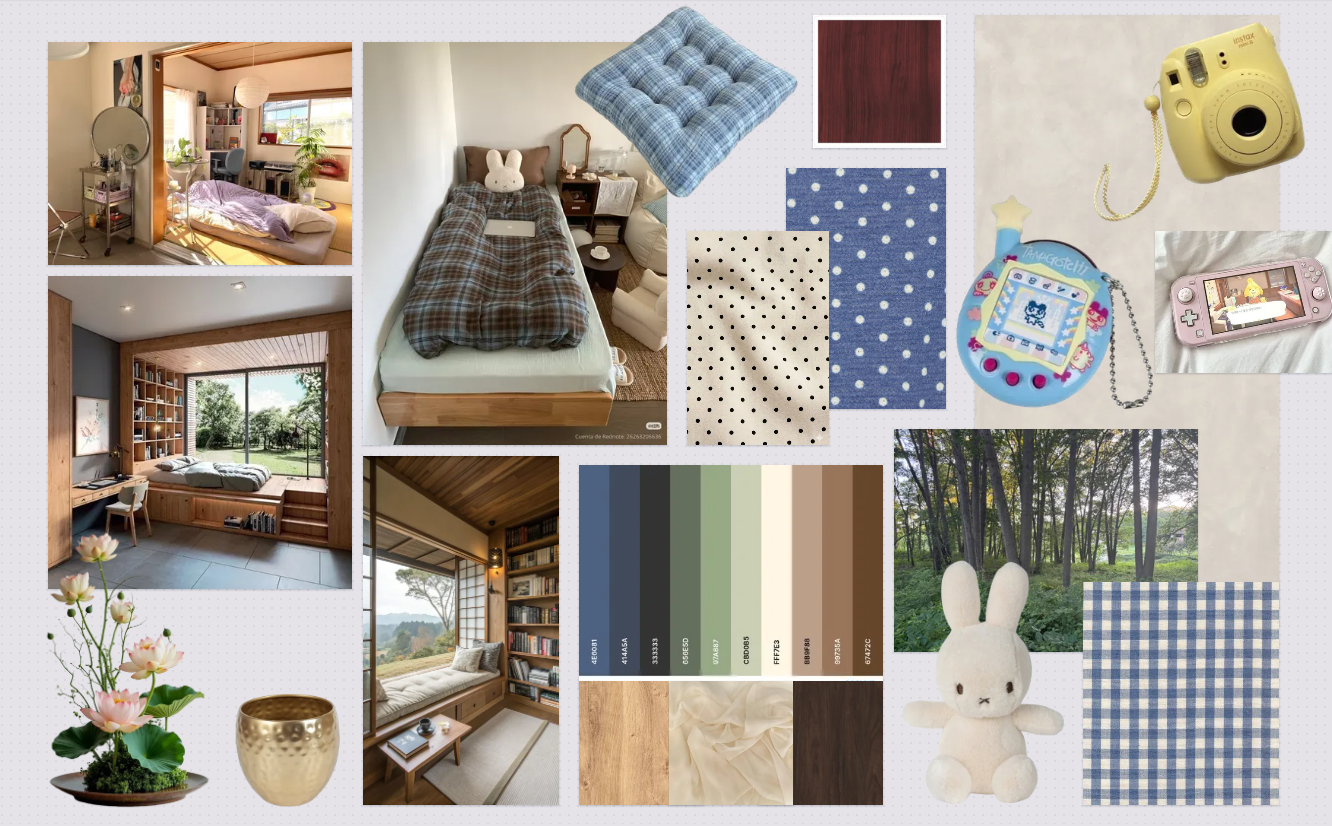
A color, material & finish study. Lots of warm woods, paper and tatami greens, soft indigo textiles and gingham, with brushed gold and nostalgic pops. The palette anchors the wabi-sabi, lived-in feeling the whole interior is built around. The vibe is playful, nostalgic to childhood summers and late night video games.
Process
Concept & Planning
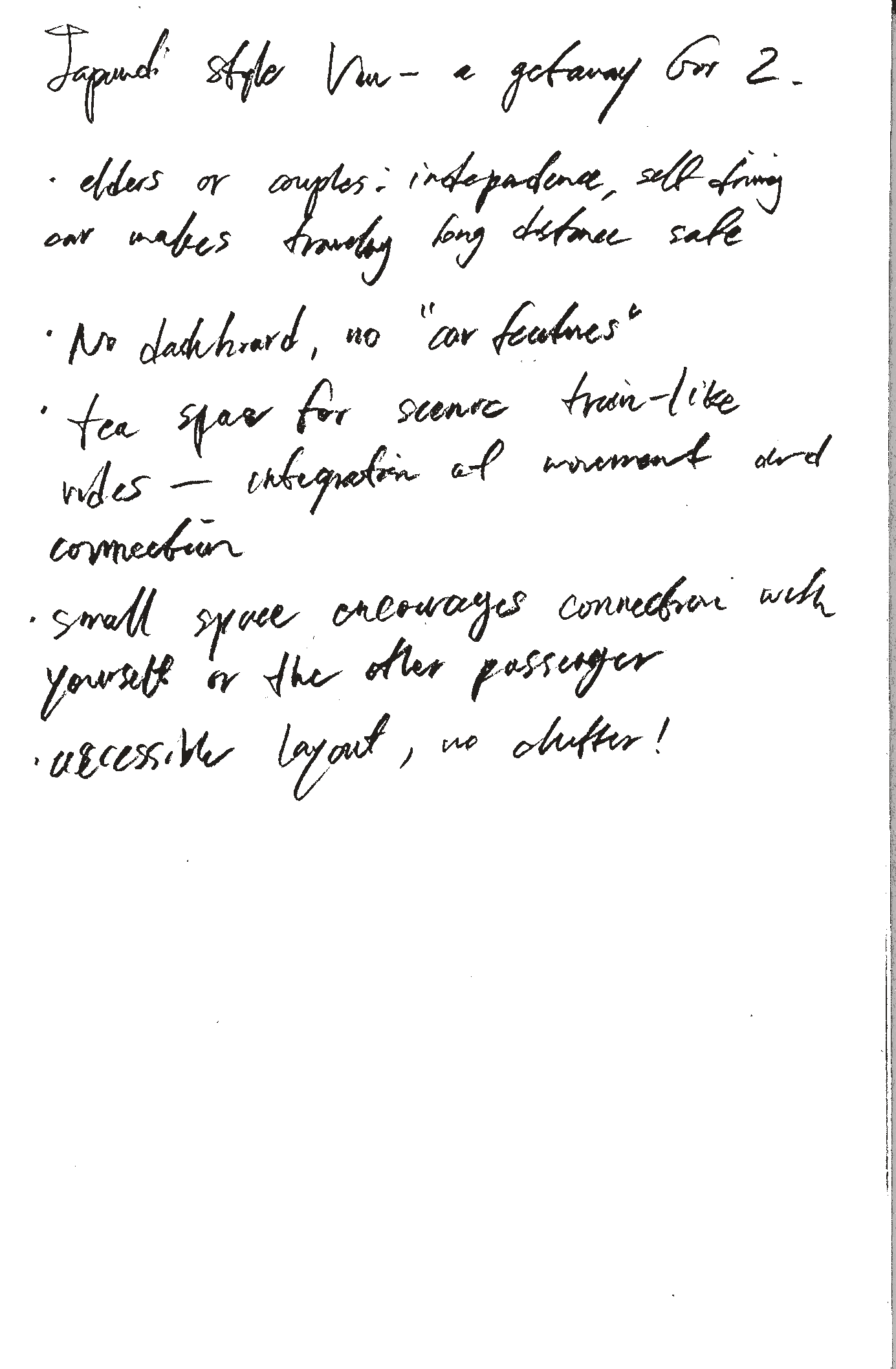
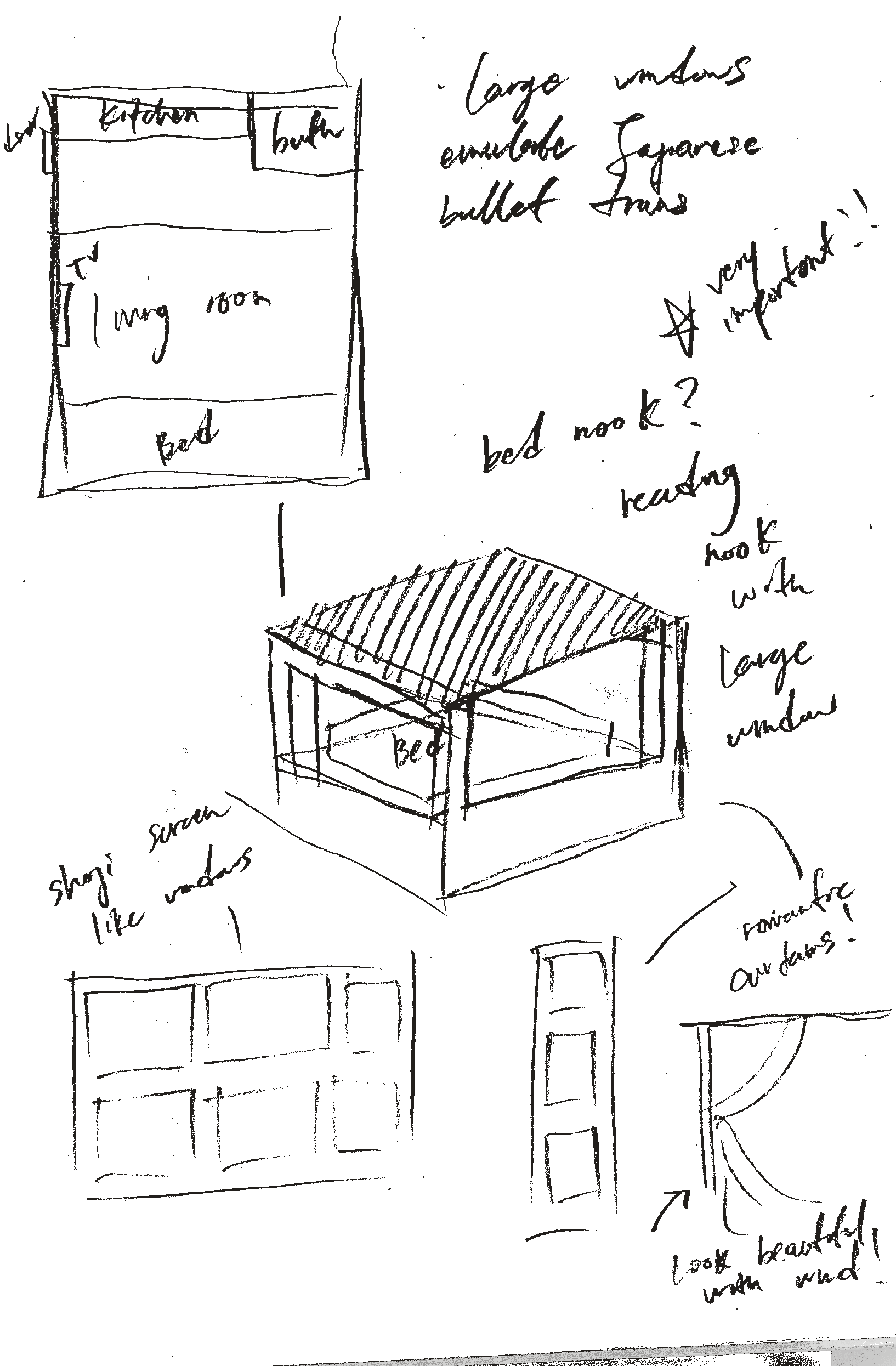
Early notes of my intent: a Japandi-style retreat for elders or couples, where self-driving makes long-distance travel safe and independent. No dashboard, no "car features". Instead, a tea space for scenic, train-like rides. The small layout encourages connection with yourself and your companion.
Layout Explorations
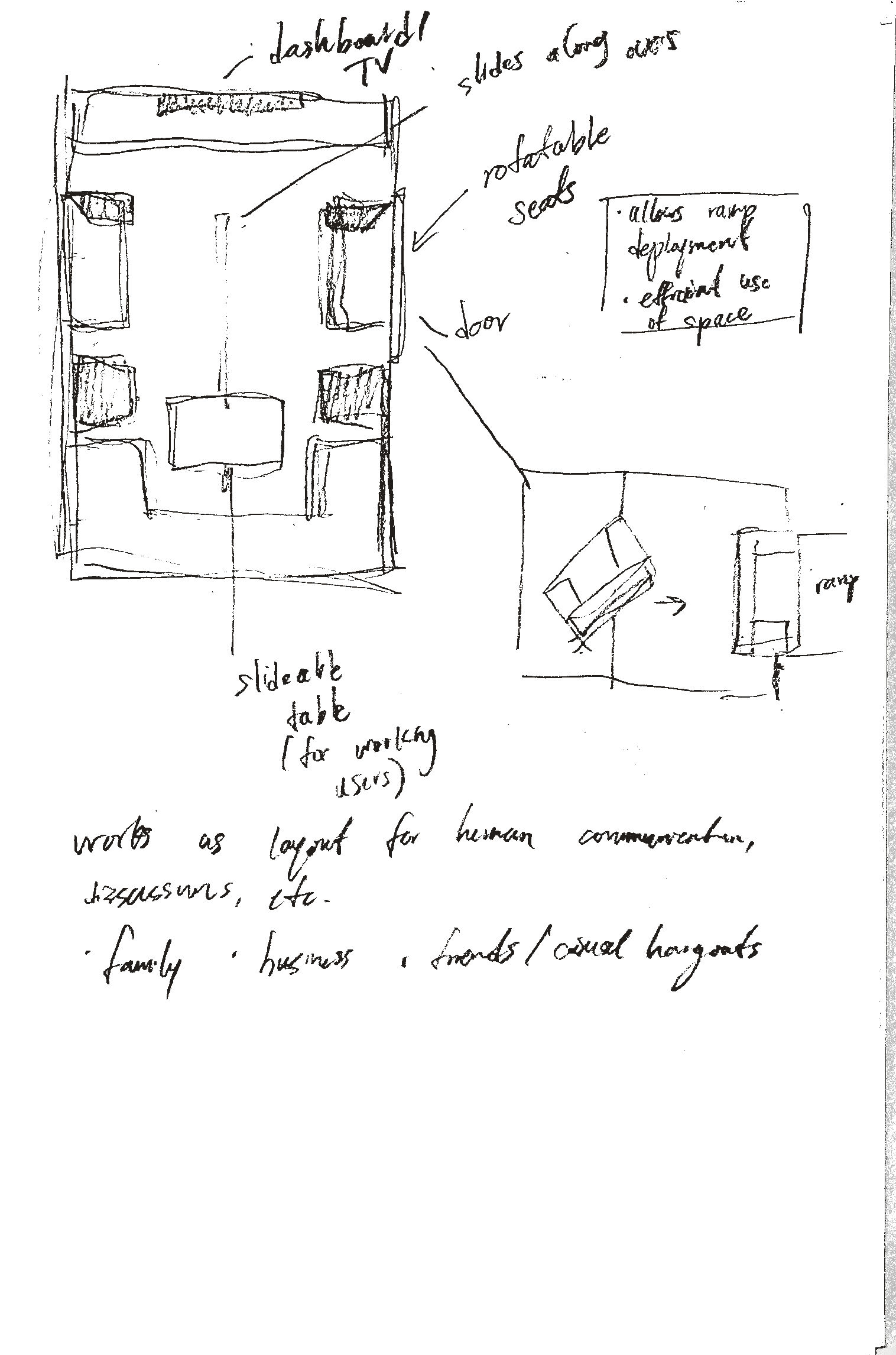
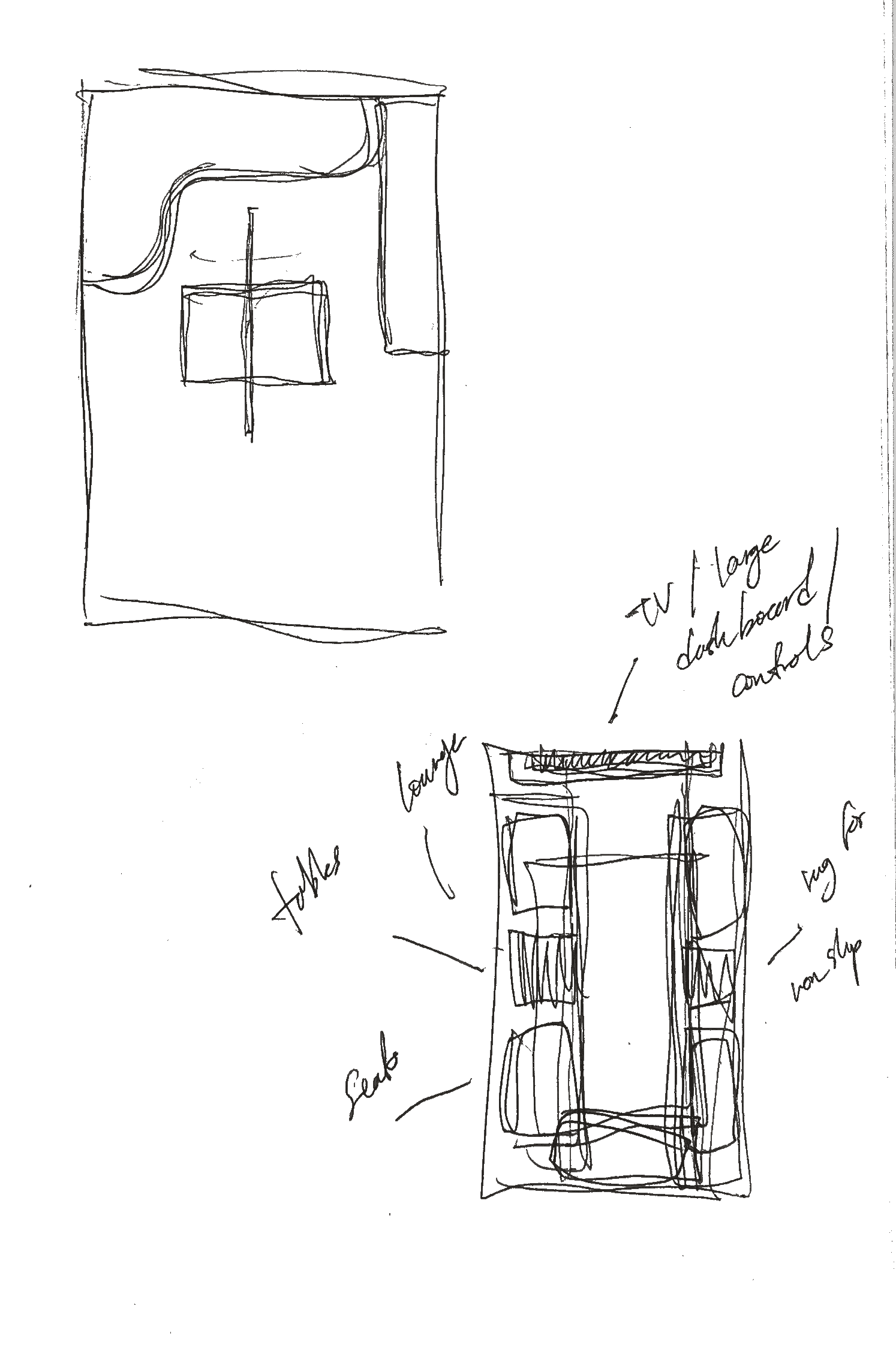
The first layout I tried relied on car logic: rotatable seats, a slide-along TV, a deployable ramp. They worked, but kept the space feeling like a vehicle. I scrapped them to make proper use of the freed space —if the car drives itself, it shouldn't need "car features" at all.
Final Concept
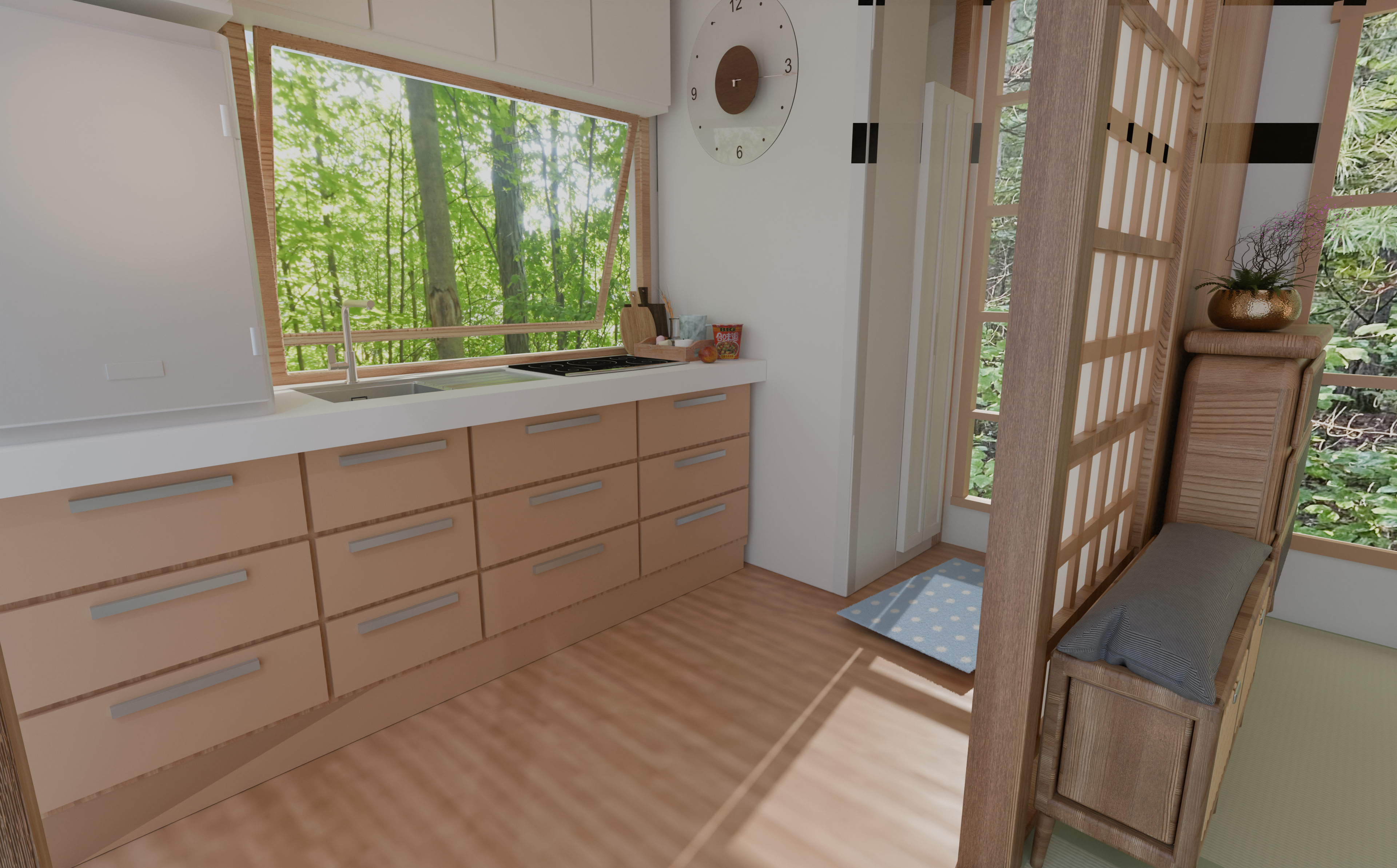
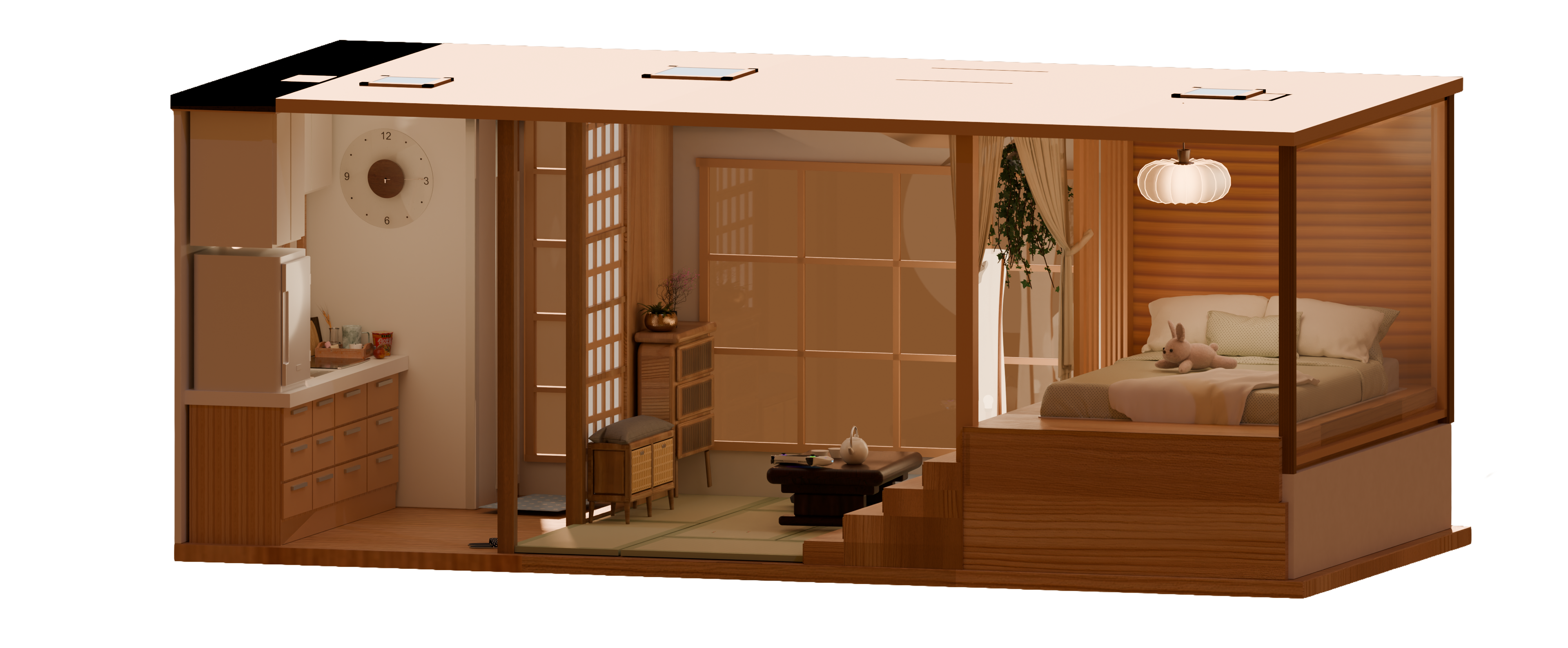
The resolved plan reads like a small home: kitchen and bath at one end, a living/tea space in the middle, and a quiet bed nook separated at the far end. Large shoji-screen-like windows (inspired by Japanese bullet trains) wrap around the bed nook, making the landscape the view from bed. Shallow accessible stairs are deployed for the elderly, which can also be replaced with a ramp.
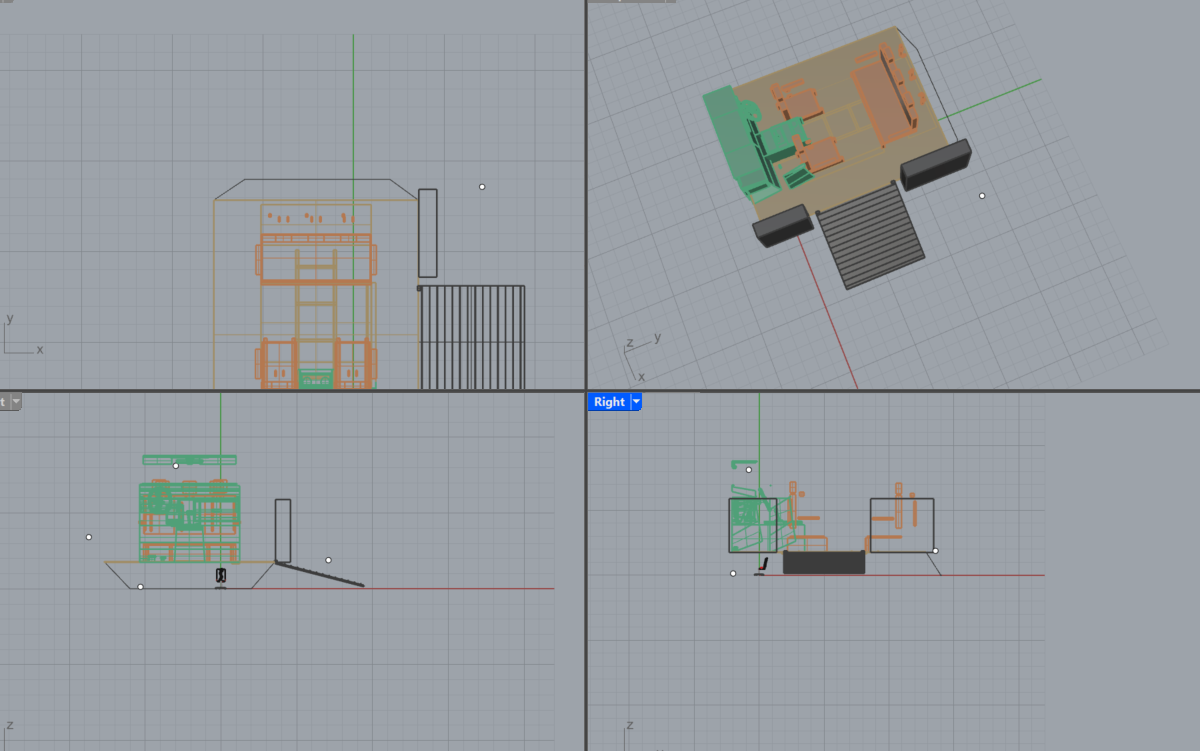
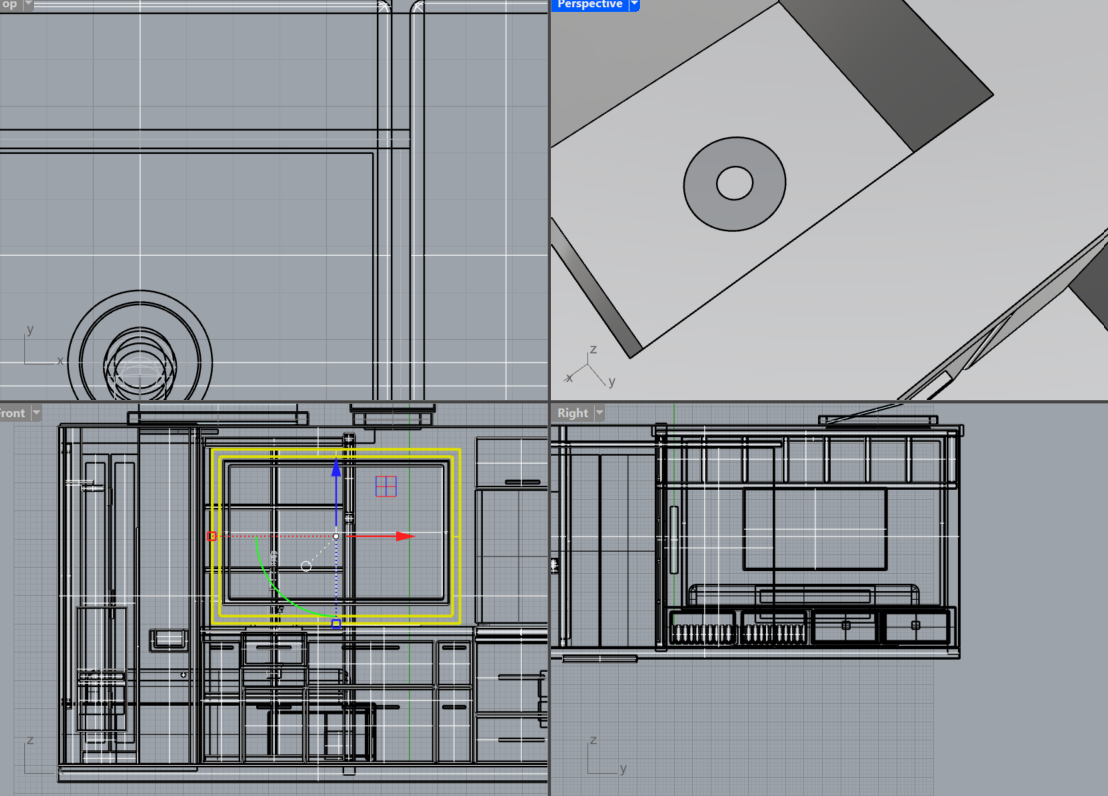
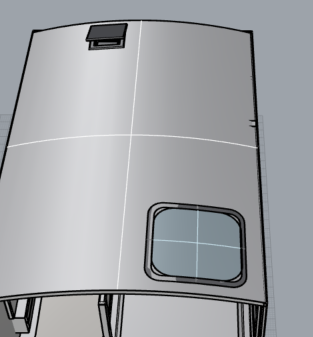
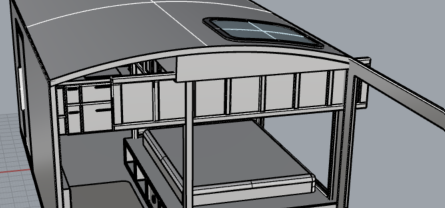
Modeling in Rhino
Modeling the interior in Rhino, in chronological order. After many iterations, I later moved the bed to the very end of the cabin. It was very important to me to find the best "relaxation nook," wrapped on three sides by glass, perfect for bird watching.
FINAL RENDERS IN BLENDER!
Reflection
Drift became a room rather than a vehicle — a quiet, lived-in retreat that opens to the landscape instead of the road. If I took it further, I’d pressure-test the layout at full scale and detail exactly how the bed, stairs, and storage fold and move.
Smart Eyewear · 2026
A current project, still in progress. I'm prototyping the electronics and the frame — renders and build photos to come!
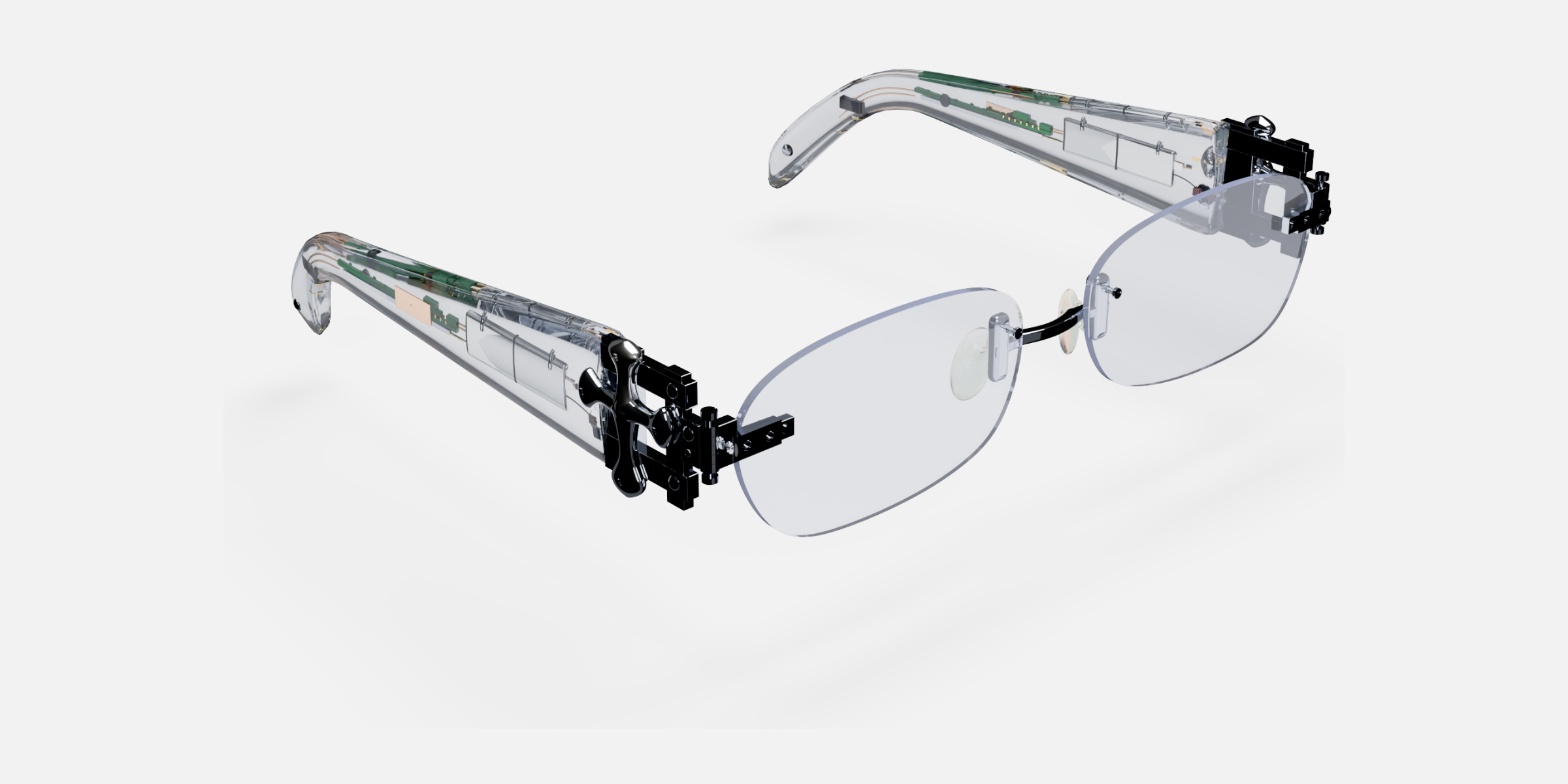
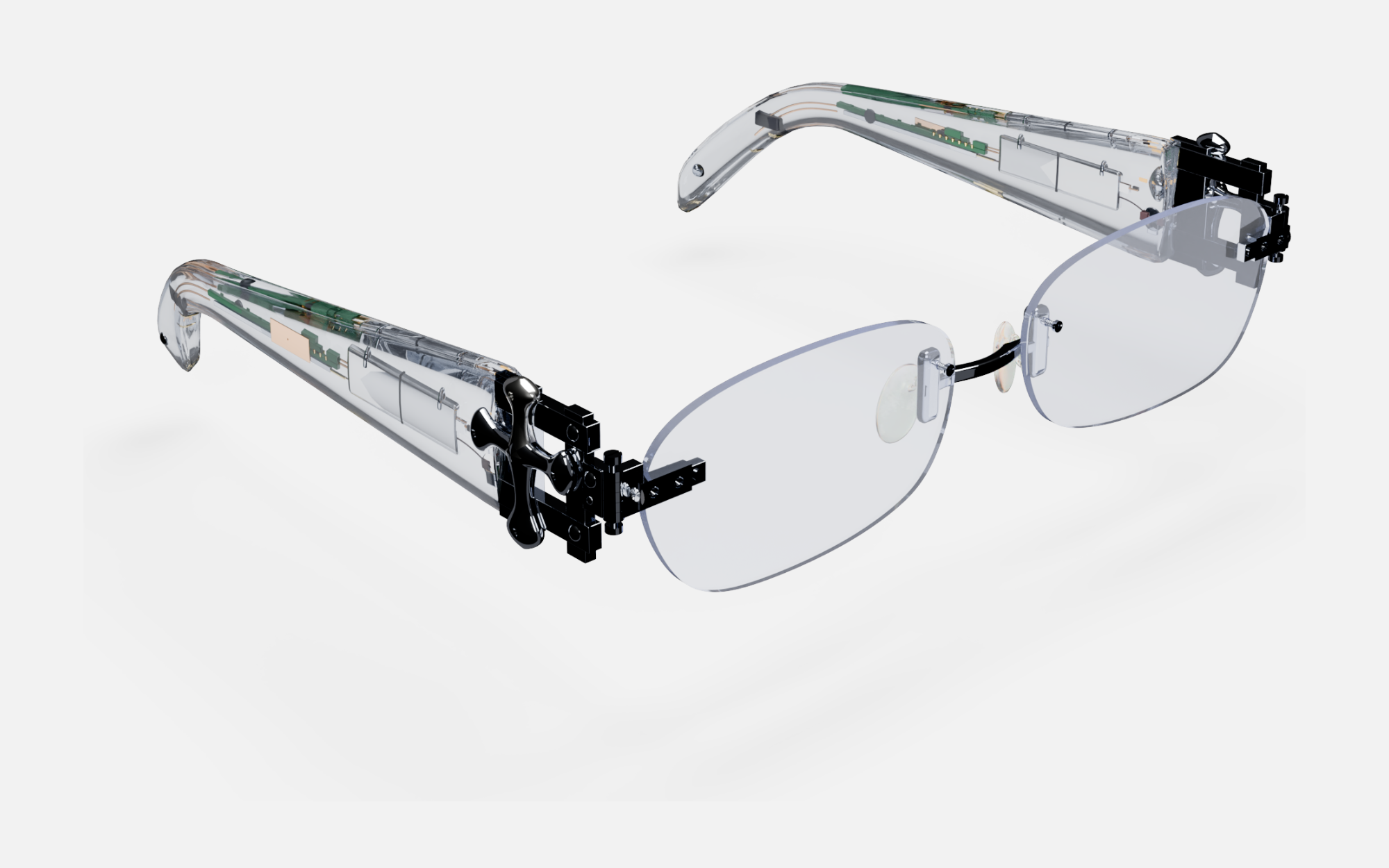
A fashion line of smart eyewear that gently reminds you to rest your eyes — calm tech against digital eye strain.
What it does
Gentle nudge
A soft pulse at the temple every 20 minutes cues you to rest your eyes.
Motion sensing
A 6-axis sensor in the frame knows when you're still and staring at a screen.
Companion app
A calm progress bar fills as you stare and drains as you look around — no numbers.
Fashion first
A clear frame with silver detailing and blue-light lenses — worn for the look.
Renders
Type
Self-initiated
Year
2026
Tools
Arduino · Rhino · Figma
Role
Solo
How long can the eye stare at a screen before it strains? Iris is eyewear that gently reminds you to rest. No stressful numbers, just a calm cue.
Inspired by my love for Gentle Monster and cyberpunk aesthetics, Iris is a fashion line of smart eyewear that targets eye strain from digital devices.
Concept
To target consumers, the frames have are not only fashionable, but also a support to your health.
It's calm tech: Iris lets you know when it's time to take a break through a soft, calming stimulus like a vibrational pulse at the temple.
Material Research
How It Works
Switch on. A touch of the button starts a 20-minute timer as you settle in front of a screen, head mostly still.
The nudge. At 20 minutes, the glasses pulse — a soft cue that it's time to rest your eyes.
30-second cool-down. One pulse to begin, two to finish. The motion sensor checks that your head is moving and encourages a few extra blinks.
Reset. The glasses return to their normal state, and the whole cycle loops.
The App
A 6-axis IMU (gyroscope + accelerometer) inside the frames reads the head's movement and sends it to the phone over Bluetooth Low Energy. The app doesn't care where you're looking, only that the coordinates are changing.
When you're still and staring, a progress bar fills. When you look around, it pauses and drains. At full, the app tints the lenses for a 30-second refresh, then clears them and resets — no stressful numbers, just a calm bar.
Prototype Renders
Build Roadmap
I · Forensics
Building a cardboard and plastic model of the glasses.
II · The Bridge
Build the concept of a simple app with a progress bar driven by a test data stream. Figma, then Flutter/Swift.
{{ cp.typeYear }}
{{ t }}
I'm currently entering my second year of Industrial Design at Pratt Institute in Brooklyn, New York. As a tactile learner, I've always been curious about how things are built and how to drive a product further. I work best collaborating across disciplines, pushing ideas to resolution.
To me, the best design solves an emotional need as much as a functional one. I'm interested in how product design can support the way we live and feel quietly without feeling invasive or demanding attention. All my projects aim for that philosophy: familiar, supportive, and straightforward.
Growing up, my grandparents always supported my creative journey. My fondest memories are evenings watching my grandfather practice calligraphy and learning to sew from my grandmother. As a result, I gravitated toward hands-on activities. Product design lets me put those instincts to work, making objects that serve people through both function and empathy.
My mission is to make technology feel familiar and nostalgic instead of cold and clinical. Technology built to support us often feels intimidating and difficult to use; it can shut out the ones who need it the most, such as older adults. I design intuitive products: elderly friendly by default and welcoming to all ages.
My eyes has been trained through years of fine art, giving me a sharp sense of aesthetics, material, and craft. I bring that sensitivity into industrial design to moving fluidly between sketching, making, and CAD. I care deeply about the small details of how a product feels to actually live with.
Concept development and research, sketching and ideation, CAD and physical modeling, and CMF direction. I'm comfortable taking a fuzzy brief all the way through to resolved renders and working prototypes, and I think about the product commercially, not just aesthetically: who it's for, why they'd buy it, how it fits a line.
Scholastic Art Awards
Regional recognition
Pratt FoundationFolio Winner
Top foundation-year portfolio
President's List
Pratt Institute
Federal Duck Stamp
National recognition · ages 12 & 14
English — fluent
Chinese — fluent
Sketches · Studies
Charcoal, Neocolor, and acrylic studies.
Pratt FoundationFolio Winner · 2026
{{ a.medium }}
{{ a.award }}
3D Sculptures
Sculptural studies in wood, where structure, balance, and material meet. The same instincts that drive my product work, made physical.
Pratt FoundationFolio Winner · 2026
{{ a.medium }}
{{ a.award }}
Fine Art · Foundation
Before I pursued industrial design I spent many years of studio practice in painting and drawing. These efforts are recognized through my fine arts portfolio, which has shaped the way I see form, light, and material. The pieces below act as the foundation for my design eye.
Pratt FoundationFolio Winner · 2026
Scholastic Regional Gold Key · Portfolio
Scholastic Regional Silver Key · Portfolio
Federal Duck Stamp Winner
Click any image to enlarge.
{{ a.medium }}
{{ a.award }}